

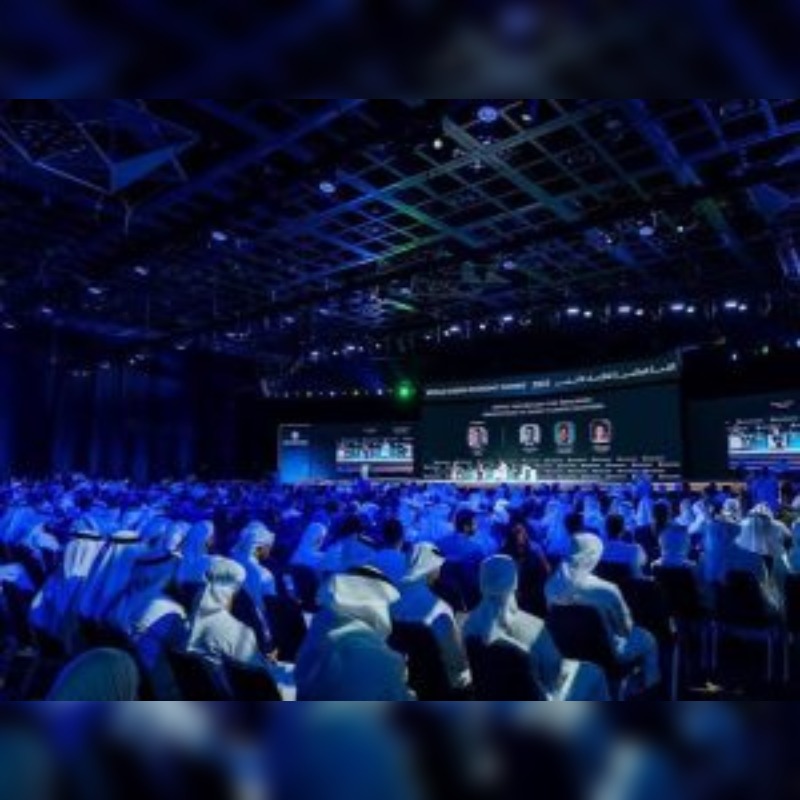
World Green Economy Summit 2026 Brings Global Leaders to Dubai to Scale the Green Transition
Government leaders, investors, infrastructure developers, sustainability experts and global businesses will gather at Dubai World Trade Centre on 21 and 22 October 2026 when the World Green Economy Summit returns for its 12th edition.
Organised by the Dubai Supreme Council of Energy, Dubai Electricity and Water Authority and the World Green Economy Organization, the summit will take place under the theme “From Success to Scale: Showcasing the Green Economy.”
That theme captures one of the biggest challenges now facing the global sustainability movement.
The world no longer lacks pilot projects.
Solar farms exist.
Electric vehicles are increasingly common.
Battery storage is expanding.
Green buildings have been demonstrated.
Climate-finance instruments have been developed.
Cities have introduced resilience programmes.
The difficult question is how to scale these solutions fast enough to make a meaningful economic and environmental difference.
That is the conversation World Green Economy Summit 2026 is designed to address.
Moving From Climate Targets to Implementation
Governments around the world have announced long-term climate targets.
Businesses publish sustainability strategies.
Investors commit capital to energy transition.
But commitments do not automatically produce infrastructure.
A renewable-energy project needs land.
Permits.
Financing.
Grid connections.
Engineering.
Equipment.
Long-term customers.
A building-efficiency programme needs owners willing to invest.
Electric mobility requires charging infrastructure.
Green hydrogen needs enormous amounts of renewable electricity.
The transition therefore depends on execution.
WGES 2026 focuses strongly on solutions that have already demonstrated results and can now be expanded.
Dubai Becomes a Meeting Point for the Green Economy
The summit takes place as the UAE continues investing heavily in clean energy, sustainable infrastructure and economic diversification.
For organisations based in Dubai, the event offers direct access to decision-makers working across energy, finance, government and infrastructure.
The location is particularly relevant because the Gulf itself is undergoing a major economic transition.
Hydrocarbon industries remain important.
At the same time, enormous investments are flowing into solar power, sustainable cities, electric mobility, energy efficiency and emerging clean technologies.
The region is therefore becoming a laboratory for how traditional energy economies can diversify.
Four Main Pillars Shape the 2026 Summit
The 2026 programme is structured around four major thematic pillars focused on scaling the green economy.
Rather than discussing sustainability only in broad terms, the summit brings together projects, financing models and policy approaches that have demonstrated real-world potential.
This matters because the climate debate can easily become abstract.
Businesses need to understand what can actually be built.
Investors need bankable projects.
Governments need policies capable of attracting capital.
Infrastructure developers need predictable regulation.
WGES attempts to connect those groups.
Renewable Energy Has Become Mainstream Infrastructure
Solar and wind were once treated as alternative energy.
That description is increasingly outdated.
Renewables now form a central part of new electricity investment in many markets.
Solar costs have declined dramatically over the long term.
Large projects can provide electricity at competitive prices.
The Gulf has particularly strong solar resources.
But renewable generation creates new infrastructure requirements.
Electricity production varies.
Grid systems need flexibility.
Storage becomes important.
Transmission networks need expansion.
The next stage of the renewable transition is therefore about complete energy systems rather than individual solar farms.
Energy Storage Is Becoming Critical
Battery storage helps electricity systems deal with periods when renewable generation and demand do not match.
Solar production peaks during daylight.
Electricity demand can remain high after sunset.
Storage can absorb electricity during one period and return it later.
The technology can also support grid stability and resilience.
Costs remain important.
Battery chemistry matters.
Safety matters.
Project economics vary.
Long-duration storage may eventually require technologies beyond conventional lithium-ion batteries.
Investors and policymakers therefore need to evaluate storage as infrastructure rather than simply another technology product.
Green Hydrogen Continues to Attract Attention
Hydrogen produced using renewable electricity is one of the most discussed technologies in industrial decarbonisation.
Potential uses include steel production.
Shipping fuels.
Fertiliser.
Heavy industry.
Long-term energy storage.
The challenge is economics.
Producing green hydrogen requires significant amounts of renewable electricity.
Infrastructure needs investment.
Transport can be difficult.
Customers need long-term supply agreements.
Large projects therefore depend on coordination between governments, investors, energy developers and industrial buyers.
A summit bringing these groups together can help move discussions toward implementation.
Climate Finance Determines What Gets Built
Technology alone does not create the green economy.
Projects need capital.
A renewable-energy development can require billions of dollars.
Urban transport infrastructure may take decades to repay.
Building-efficiency programmes need financing structures that make upgrades attractive.
Climate finance therefore forms a major part of the sustainability transition.
Banks.
Sovereign funds.
Pension funds.
Private equity.
Development institutions.
Governments.
All can play different roles.
The challenge is matching appropriate capital with projects carrying different risk profiles.
Investors Want Bankable Green Projects
There is often a gap between announcements of available green capital and projects actually receiving financing.
Investors need credible economics.
Predictable regulation.
Reliable counterparties.
Clear contracts.
Appropriate risk allocation.
A project can be environmentally valuable and still be financially unattractive.
Closing this gap requires project developers to think like investors.
What are expected returns?
Who buys the output?
What happens if costs rise?
Which risks can be insured?
Which guarantees exist?
Green investment needs the same financial discipline as any other investment.
Cities Are Central to the Transition
Most of the world’s population increasingly lives in urban areas.
Cities consume enormous amounts of energy.
Buildings require cooling and heating.
Transport produces emissions.
Water infrastructure needs electricity.
Waste needs management.
Urban planning therefore has a major influence on environmental performance.
A well-designed city can reduce unnecessary travel.
Efficient buildings lower energy consumption.
Public transport can reduce car dependency.
Green spaces improve resilience.
District cooling can improve efficiency in hot climates.
Urban sustainability is not one technology.
It is a system.
Buildings Offer Immediate Efficiency Opportunities
Buildings account for a substantial share of global energy use.
Many improvements are already technically straightforward.
Efficient cooling.
Better insulation.
Smart controls.
LED lighting.
Improved windows.
Energy monitoring.
The barrier is often financing or incentives rather than technology.
A building owner may hesitate to invest if payback takes several years.
Tenants may pay energy bills while owners pay for improvements.
Policies and financing models need to solve these misaligned incentives.
Cooling Is Particularly Important in the Gulf
Air-conditioning is essential across Gulf cities.
It also creates enormous electricity demand.
Improving cooling efficiency can therefore deliver significant economic and environmental benefits.
District cooling systems can serve entire developments.
Modern chillers use less power.
Smart systems can adjust output according to occupancy.
Better building envelopes reduce heat gain.
The region has a strong incentive to become a global leader in efficient cooling technology.
Water and Energy Are Closely Connected
Producing and distributing water requires energy.
Desalination is particularly important in arid regions.
Pumping water consumes electricity.
Wastewater treatment also requires infrastructure.
This means water efficiency can reduce energy demand.
At the same time, clean-energy systems can reduce the environmental impact of water production.
Policy needs to consider both systems together.
Electric Mobility Is Changing Urban Infrastructure
Electric vehicles continue expanding.
Their adoption affects more than car manufacturers.
Cities need chargers.
Utilities need additional power.
Buildings need electrical infrastructure.
Fleet operators need charging strategies.
Battery recycling becomes important.
Public transport is also electrifying.
The transition requires cooperation between vehicle manufacturers, utilities, governments, real estate developers and technology companies.
Public Transport Can Deliver Larger Benefits Than Vehicle Replacement Alone
Replacing petrol cars with electric cars can reduce tailpipe emissions.
It does not solve every urban problem.
Traffic remains.
Roads still require space.
Parking remains necessary.
High-quality public transport can move far more people efficiently.
Metro systems.
Buses.
Rail.
Walking.
Cycling.
Sustainable mobility therefore needs a broader perspective than simply changing engine technology.
Circular Economy Goes Beyond Recycling
The circular economy aims to keep products and materials useful for longer.
Repair.
Reuse.
Remanufacturing.
Recycling.
Product-as-a-service models.
Better design.
Traditional recycling occurs after waste has already been created.
Circular thinking starts earlier.
Could the product last longer?
Can parts be replaced?
Can materials be separated?
Is a disposable item necessary?
Design decisions determine much of the environmental impact before consumers ever receive the product.
Waste Can Become an Economic Resource
Organic waste can become compost or energy.
Construction materials can be recovered.
Metals retain substantial value.
Plastic waste can sometimes become secondary feedstock.
Electronic waste contains valuable materials.
But waste processing needs infrastructure and reliable markets.
A circular economy succeeds only when recovered material has economic value.
Governments can support this through standards, procurement rules and waste-management systems.
Food Systems Also Need Greater Resilience
Climate change affects agriculture through heat, drought and extreme weather.
Food systems therefore form part of the green-economy discussion.
Water-efficient agriculture.
Controlled-environment farming.
Supply-chain resilience.
Reduced food waste.
Alternative proteins.
Better storage.
The Gulf has particular interest in food security because much of its food is imported.
Technology can strengthen local production without eliminating the need for international trade.
Nature Is Becoming an Economic Issue
Climate discussions historically focused heavily on carbon.
Biodiversity and ecosystems are receiving more attention.
Healthy natural systems support agriculture.
Water cycles.
Coastal protection.
Tourism.
Fisheries.
Ignoring nature can create economic losses that eventually appear in financial systems.
Companies and investors are beginning to examine nature-related risk alongside climate risk.
Resilience Matters Alongside Emissions Reduction
Even aggressive climate action cannot remove every future climate impact.
Cities and businesses also need adaptation.
Flood protection.
Heat-resilient infrastructure.
Water security.
Emergency planning.
Climate-resistant agriculture.
Cooling.
Insurance.
Resilience investment helps economies continue functioning as environmental conditions change.
This creates another large market for infrastructure and technology.
Artificial Intelligence Could Improve Resource Efficiency
AI can analyse electricity demand.
Optimise cooling.
Forecast renewable generation.
Manage building systems.
Improve logistics.
Monitor water networks.
Detect equipment problems.
The strongest sustainability applications may not look dramatic.
A system saving a few percentage points of electricity across thousands of buildings could create enormous value.
AI becomes environmentally useful when it improves real physical systems.
AI Also Consumes Significant Energy
The relationship is not entirely positive.
Large data centres use substantial electricity.
AI workloads increase computing demand.
Cooling infrastructure consumes additional resources.
The technology industry therefore needs to improve energy efficiency while expanding.
Where data centres are built increasingly depends on access to reliable power.
Digital growth and energy policy are becoming closely connected.
Carbon Markets Remain Controversial but Important
Carbon credits can channel money toward emissions-reduction or removal projects.
Supporters argue that markets mobilise capital.
Critics worry about weak projects and exaggerated claims.
Quality is therefore essential.
A credit must represent a credible environmental outcome.
Companies also need to avoid using offsets as a substitute for reducing emissions they can realistically eliminate.
Better standards and transparency will determine whether carbon markets maintain credibility.
Policy Can Accelerate or Slow the Green Transition
Businesses make investment decisions based partly on rules.
Renewable developers need predictable approval systems.
Electric vehicle companies need charging standards.
Building owners respond to efficiency requirements.
Manufacturers adapt to recycling obligations.
Uncertain policy increases risk.
Stable policy can attract capital.
WGES gives government representatives and businesses an opportunity to discuss how regulatory frameworks translate ambitions into investment.
Green Jobs Require New Skills
Energy transition creates different workforce needs.
Solar engineers.
Battery specialists.
Sustainability analysts.
Energy managers.
Electric-vehicle technicians.
Green building professionals.
Climate-finance specialists.
Workers in conventional industries also need retraining.
A successful transition therefore involves education and workforce development as much as infrastructure spending.
From Successful Projects to Global Scale
The central message of WGES 2026 is contained in its theme.
The world already knows many solutions can work.
The challenge is scaling them.
A successful solar project needs replication.
A good building standard needs thousands of buildings.
A financing mechanism needs billions rather than millions.
A resilient urban model needs adoption across cities.
Scaling requires policy, technology, capital and leadership to align.
Two Days Focused on the Economics of Sustainability
The green transition will succeed only if sustainable solutions can operate within real economies.
Projects need returns.
Businesses need customers.
Governments need affordable infrastructure.
Communities need tangible benefits.
From 21 to 22 October 2026, World Green Economy Summit will bring those perspectives together at Dubai World Trade Centre.
The conversation is moving beyond whether a greener economy is necessary.
The real question is how to build it at sufficient scale.