

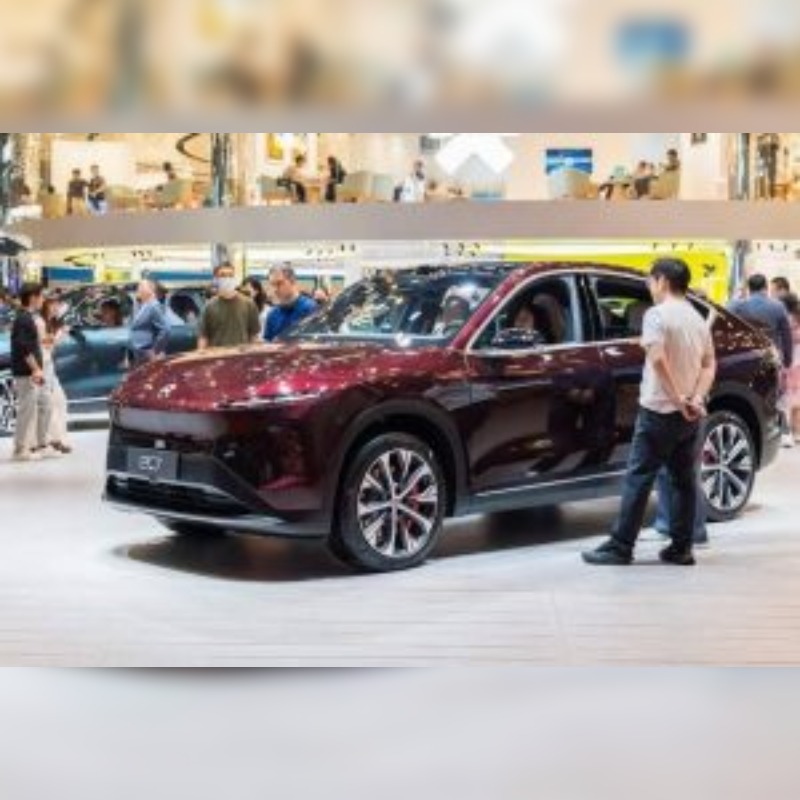
EV World 2026 Brings 300+ Companies to Dubai for the Future of Electric and Smart Mobility
Electric vehicle manufacturers, charging companies, battery developers, fleet operators, investors and transport authorities will gather at Dubai World Trade Centre from 10 to 12 November 2026 when EV World stages its major electric and sustainable mobility exhibition and conference.
Organised in strategic partnership with Dubai’s Roads and Transport Authority, the event is expected to attract more than 300 exhibiting companies, over 10,000 specialist visitors, more than 70 speakers and around 30 industry partners.
The event operates under the theme “Driving a Smart and Sustainable Mobility Future.”
That theme reflects how the electric-vehicle transition has moved beyond the cars themselves.
Manufacturers need batteries.
Drivers need chargers.
Utilities need additional electricity capacity.
Fleet operators need workable economics.
Cities need charging infrastructure.
Software companies need to connect vehicles and energy systems.
Governments need regulation.
Banks and investors need financing models.
The transition succeeds only when all of these pieces develop together.
Electric Vehicles Are Moving Into the Mainstream
Electric cars were once viewed largely as experimental or premium products.
That is changing quickly.
Major manufacturers now offer EVs across more vehicle categories.
SUVs.
Sedans.
Commercial vehicles.
Delivery vans.
Luxury vehicles.
Public transport.
The question for many markets is no longer whether electric mobility will grow.
It is how quickly infrastructure, pricing and consumer confidence can develop around it.
EV World brings those different stakeholders together.
The Middle East Has Become an Important EV Market
The Gulf presents an interesting environment for electric mobility.
Vehicle ownership is high.
Cities are modern.
Consumers adopt new technology quickly.
Governments have strong sustainability ambitions.
Energy infrastructure is sophisticated.
At the same time, long driving distances, extreme heat and charging requirements create local challenges.
Companies entering Dubai and wider Gulf markets therefore need products designed for regional conditions rather than assuming solutions can be copied directly from Europe or Asia.
Charging Infrastructure Is the Foundation
An electric vehicle is only useful if drivers can charge it reliably.
This makes charging infrastructure one of EV World’s core sectors.
Home charging handles many daily journeys.
Workplace chargers provide another option.
Public charging supports drivers without private parking.
Fast chargers enable longer journeys.
Fleet depots need completely different systems capable of charging many vehicles simultaneously.
The number of chargers matters.
Their location matters more.
A poorly located charging station can remain underused while drivers queue elsewhere.
Infrastructure planning increasingly depends on mobility and energy data.
Fast Charging Changes the Driving Experience
High-power chargers can reduce charging time dramatically.
This makes EVs more practical for long-distance travel.
But higher charging speeds create infrastructure requirements.
Grid connections need sufficient capacity.
Equipment becomes more expensive.
Battery temperature needs management.
Charging speed may decrease as a battery becomes full.
Drivers therefore need realistic expectations.
The future network will probably combine large numbers of slower chargers with strategically located high-power hubs.
Home Charging Remains the Most Convenient Model
For consumers with dedicated parking, home charging offers a major advantage.
The vehicle can charge overnight while it is not being used.
There is no need to visit a fuel station routinely.
This changes the traditional refuelling model completely.
However, apartment buildings create additional complexity.
Who pays for installation?
Can existing electrical infrastructure support chargers?
How is electricity billed?
What happens when dozens of residents eventually own EVs?
Developers and building managers increasingly need charging strategies before demand becomes widespread.
Fleet Electrification Could Move Faster Than Private Adoption
Commercial fleets are particularly important.
Delivery companies.
Taxi operators.
Corporate fleets.
Government vehicles.
Buses.
Fleet managers make decisions based heavily on economics.
Vehicle purchase price matters.
Energy cost matters.
Maintenance matters.
Daily mileage matters.
Resale value matters.
Charging downtime matters.
An electric vehicle can be more expensive initially but cheaper to operate.
The relevant metric is total cost of ownership.
EV World specifically targets fleet and mobility managers because large fleet purchases can accelerate market adoption quickly.
Last-Mile Delivery Is a Strong EV Use Case
Urban delivery vehicles often travel predictable routes and return to the same depot.
That makes electrification attractive.
Vehicles can charge overnight.
Daily mileage is known.
Fuel savings accumulate rapidly.
Noise can be reduced in residential areas.
Electric delivery vans are therefore likely to become an increasingly visible part of city logistics.
However, operators need to calculate charging schedules carefully.
A van sitting at a charger during peak delivery hours produces no revenue.
Electric Buses Can Transform Public Transport
Public buses operate many hours each day.
This creates significant fuel consumption.
Electrification can reduce local air pollution and noise.
But buses require large batteries and substantial charging infrastructure.
Operators need to choose between depot charging, opportunity charging and other strategies.
Route length matters.
Climate-control systems affect energy use.
Hot weather creates another challenge because air-conditioning demand can be significant.
Public transport electrification therefore requires careful system design.
Batteries Define Much of an EV’s Performance
Battery technology influences range.
Charging speed.
Vehicle price.
Weight.
Safety.
Lifespan.
Manufacturers are constantly balancing these factors.
Lithium-ion remains dominant, but several chemistries exist.
Some prioritise energy density.
Others offer lower cost or longer cycle life.
There is no single perfect battery for every vehicle.
A delivery van may need different characteristics from a luxury performance car.
Battery Prices Matter Enormously
The battery is one of the most expensive parts of an electric vehicle.
Declining battery costs have historically helped make EVs more competitive.
Future pricing depends on technology, manufacturing scale and raw materials.
Lithium.
Nickel.
Graphite.
Other minerals.
Supply chains therefore matter.
Countries and companies increasingly treat battery manufacturing as a strategic industry.
LFP Batteries Have Become More Important
Lithium iron phosphate batteries have gained significant market share.
They typically offer strong durability and can avoid some expensive materials used in other chemistries.
Energy density may be lower than certain alternatives, but that disadvantage is not decisive for every vehicle.
For entry-level cars, buses and fleets, cost and longevity can matter more than maximum range.
This demonstrates how the EV market is becoming more segmented.
Solid-State Batteries Remain a Major Goal
Solid-state batteries are frequently described as a potential next-generation technology.
They could theoretically provide advantages around energy density, charging or safety.
However, commercial mass production remains technically difficult.
Automotive technology often requires years of testing before deployment at scale.
Consumers should therefore distinguish promising research from products actually available in the market.
EV exhibitions provide manufacturers an opportunity to demonstrate where development has genuinely reached.
Heat Management Is Particularly Important in the Gulf
Batteries perform best within suitable temperature ranges.
Extreme heat can affect performance and ageing.
Electric vehicles therefore use sophisticated thermal-management systems.
The Gulf provides a demanding test environment.
Battery cooling needs to work effectively.
Cabin air-conditioning consumes energy.
Charging equipment must tolerate outdoor temperatures.
Manufacturers serious about regional expansion need to demonstrate that vehicles are engineered for these conditions.
Range Anxiety Is Gradually Becoming Infrastructure Anxiety
Early EV discussions focused heavily on battery range.
Modern electric vehicles increasingly provide ranges suitable for ordinary daily driving.
The concern is shifting.
Drivers want confidence that chargers will be available and operational when needed.
A charger shown on an app is useless if it is broken.
Reliable infrastructure requires maintenance, payment systems and real-time information.
Network quality matters as much as charger quantity.
Interoperability Makes Charging Easier
Drivers do not want several apps, memberships and payment systems simply to charge a vehicle.
Charging networks increasingly need interoperability.
Common standards improve convenience.
Roaming agreements can allow customers to use several networks.
Simple card or digital payment can reduce friction.
Governments have a role in establishing technical standards so infrastructure remains compatible.
Smart Charging Can Protect the Electricity Grid
If millions of EVs begin charging simultaneously after work, electricity demand can increase sharply.
Smart charging can shift some demand to lower-use periods.
A vehicle parked overnight does not always need to begin charging immediately.
Software can schedule charging according to grid conditions or electricity prices.
This turns EVs into flexible energy loads.
Managed well, electrification does not necessarily require every charger to operate at full power simultaneously.
Vehicle-to-Grid Creates a More Ambitious Possibility
Electric vehicles contain large batteries that sit unused much of the day.
Vehicle-to-grid technology explores whether some of that stored electricity can support the grid when needed.
Cars could charge when electricity is abundant and potentially return some energy later.
The idea is attractive.
Implementation is complicated.
Battery warranties.
Charging hardware.
Market rules.
Customer participation.
Software.
All need coordination.
The technology may become valuable as renewable energy increases.
Renewable Energy and EVs Reinforce Each Other
Electric vehicles remove tailpipe emissions.
Their total environmental impact partly depends on how electricity is produced.
Charging from a grid with growing renewable generation improves the climate benefit.
Solar energy is particularly relevant in the Gulf.
Daytime workplace charging could potentially align well with solar output.
Energy storage can help extend renewable electricity into other periods.
Mobility and power systems are therefore becoming increasingly connected.
Public Charging Becomes a Real Estate Business
Charging stations require land.
Shopping centres can install chargers.
Hotels can offer them to guests.
Office buildings can provide workplace charging.
Petrol stations may evolve into broader energy hubs.
Restaurants may attract customers who remain while vehicles charge.
This creates new commercial relationships between mobility companies and property owners.
Charging can become both infrastructure and amenity.
Traditional Petrol Stations Need to Adapt
A petrol vehicle refuels within minutes.
EV charging can take longer.
The service-station business model may therefore change.
Drivers might eat, work or shop while charging.
Highway hubs may include stronger hospitality components.
Traditional fuel companies are already investing in electric charging in many markets.
The energy transition does not necessarily eliminate these businesses.
It forces them to redefine what they sell.
Chinese EV Manufacturers Are Changing Competition
Chinese automotive companies have expanded internationally at remarkable speed.
Many offer strong battery technology, digital features and competitive pricing.
This is increasing pressure on established manufacturers.
Middle Eastern markets are particularly attractive because consumers are open to new brands.
Distribution partnerships, service networks and resale values will determine which entrants become established long-term players.
The competition should ultimately provide consumers with more choice.
Software Is Becoming Part of the Vehicle
Cars increasingly resemble connected computers.
Large displays.
Mobile applications.
Remote software updates.
Driver-assistance systems.
Cloud connectivity.
Navigation linked with charging.
Vehicle manufacturers therefore need software expertise traditionally associated with technology companies.
Customers may judge vehicles partly by interface quality and digital services rather than only mechanical engineering.
Cybersecurity Becomes a Safety Issue
Connected cars create cyber risk.
Vehicles communicate with mobile applications.
Charging networks process payments.
Software updates arrive remotely.
Fleet platforms collect location data.
Security needs to be designed throughout the system.
A vulnerability affecting a vehicle is more serious than an ordinary website bug because digital systems interact with physical movement.
Automotive cybersecurity will become increasingly important as connectivity expands.
Autonomous Driving Is Connected but Separate
Electric vehicles and autonomous vehicles are often discussed together.
They are different technological transitions.
A car can be electric without driving itself.
An autonomous vehicle could theoretically use another powertrain.
However, many advanced mobility programmes combine the two because new vehicle platforms integrate sensors, software and electric architectures simultaneously.
EV World includes smart and autonomous mobility within its wider ecosystem.
AI Is Transforming Mobility
Artificial intelligence supports driver assistance.
Traffic management.
Fleet optimisation.
Battery analytics.
Predictive maintenance.
Charging forecasts.
Route planning.
Autonomous systems.
The most valuable AI may operate quietly in the background.
A fleet manager may simply see lower energy costs and fewer breakdowns because software optimises operations continuously.
EV Maintenance Is Different From Conventional Cars
Electric vehicles typically have fewer moving powertrain components.
There is no conventional engine oil.
No exhaust system.
Regenerative braking can reduce brake wear.
But EVs introduce different maintenance needs.
High-voltage systems require trained technicians.
Battery diagnostics matter.
Tyres may experience different wear because vehicles can be heavy and produce immediate torque.
Workshops need new skills and safety procedures.
Technician Training Will Become a Major Industry
The automotive workforce needs to change alongside vehicles.
Mechanics trained mainly on combustion engines require high-voltage knowledge.
Charging infrastructure needs electricians and specialised technicians.
Battery systems need diagnostics.
Software expertise becomes more important.
Education and certification will be critical as EV fleets expand.
Resale Value Will Influence Consumer Confidence
Consumers consider what a vehicle will be worth several years later.
The used EV market therefore matters.
Battery health needs transparent measurement.
Buyers need confidence about remaining capacity.
Standardised battery-health reports could eventually become as normal as vehicle service histories.
Strong secondary markets reduce the perceived financial risk of buying new EVs.
Financing Can Accelerate Adoption
Higher upfront prices remain a barrier for some consumers and businesses.
Banks and leasing companies can help through financing structures that recognise lower operating costs.
Fleet leasing may reduce technology risk.
Battery warranties provide confidence.
Insurance products need to adapt.
This explains why financial institutions are part of the broader EV ecosystem represented at the event.
More Than 10,000 Specialists Create a Mobility Marketplace
EV World expects more than 10,000 specialist visitors, 300-plus exhibitors and more than 70 speakers.
That creates a marketplace extending beyond vehicles.
Charging companies can meet property developers.
OEMs can find distributors.
Fleet operators can compare vehicles.
Investors can identify technology companies.
Utilities can understand future charging demand.
Government authorities can discuss standards with industry.
These connections are essential because no company can electrify transportation alone.
Three Days Focused on the System Behind the Electric Car
The transition to electric mobility is often represented by a simple image: replacing a petrol car with an electric one.
The reality is much larger.
Vehicles need batteries.
Batteries need minerals.
Chargers need electricity.
Networks need software.
Buildings need electrical capacity.
Technicians need training.
Consumers need confidence.
Governments need standards.
From 10 to 12 November 2026, EV World will bring many of these elements together at Dubai World Trade Centre.
The future of mobility will not be defined only by which company builds the best electric car.
It will be defined by whether the complete ecosystem around that car works.