

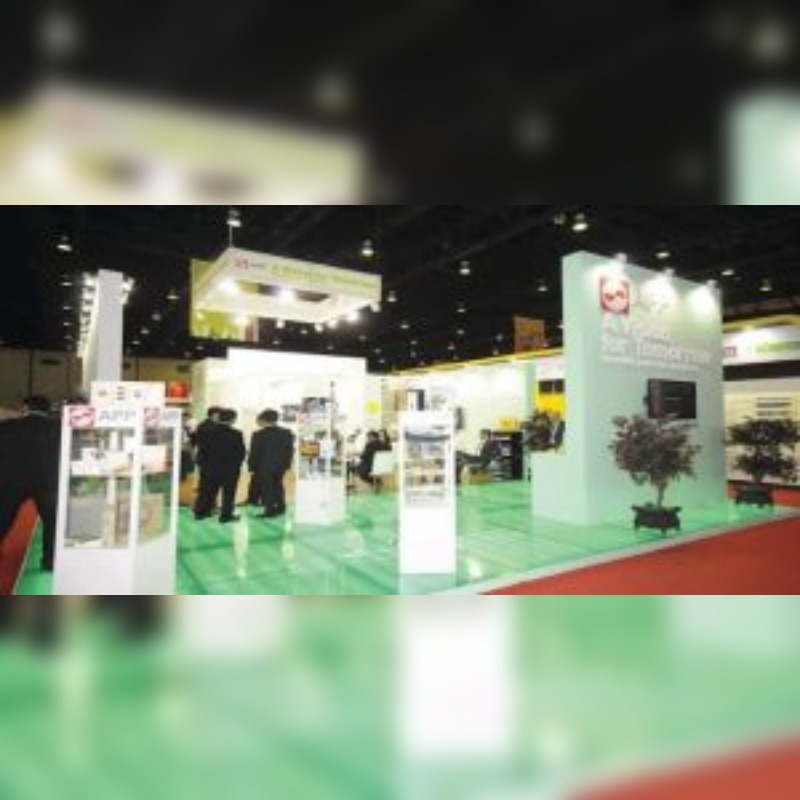
Paper Arabia 2026 Brings the Paper, Tissue, Hygiene and Pulp Industries to Dubai
Paper mills, tissue manufacturers, machinery companies, packaging producers, recyclers and hygiene-product businesses will gather at Dubai World Trade Centre from 16 to 18 November 2026 when Paper Arabia returns to Hall 4.
The specialised B2B exhibition covers paper, board, pulp, tissue, nonwovens, hygiene products, disposable products, converting machinery and related industrial technologies.
The organiser currently lists around 120 exhibitors from 28 countries and approximately 7,500 visitors across its event platform.
Unlike Paperworld Middle East, which focuses heavily on stationery and office products, Paper Arabia sits much further upstream in the industrial paper supply chain.
It is about how paper is made.
How tissue is converted.
How hygiene products are manufactured.
How recycled fibre enters production.
How packaging materials are developed.
How mills improve efficiency.
And how an industry based on one of the world’s oldest materials adapts to sustainability, automation and changing consumer demand.
For industrial businesses operating in Dubai and the wider Middle East, Paper Arabia provides a specialised environment for sourcing machinery, raw materials and production partnerships.
Paper Is Far More Than Printer Sheets
When people hear the word paper, they often imagine notebooks or office printing.
The industry is much larger.
Cardboard boxes.
Food packaging.
Tissues.
Toilet paper.
Medical products.
Paper bags.
Industrial cores.
Labels.
Specialty papers.
Disposable hygiene products.
Construction materials.
The rise of e-commerce and plastic-reduction initiatives has actually created new opportunities for certain paper categories even as digital communication reduces demand for others.
The industry is not disappearing.
It is changing its product mix.
Packaging Has Become One of the Strongest Growth Areas
Online shopping requires enormous amounts of packaging.
Products need boxes.
Protective inserts.
Shipping envelopes.
Labels.
Food delivery adds another major category.
Brands are also searching for alternatives to some forms of plastic packaging.
Paper and board are natural candidates in many applications.
This creates opportunity for mills and converters.
But replacing plastic is not always simple.
Packaging still needs strength.
Moisture resistance.
Grease resistance.
Food safety.
Barrier performance.
Material science becomes central.
Corrugated Board Keeps E-Commerce Moving
Corrugated boxes are one of the hidden infrastructures of modern commerce.
They protect products while remaining relatively lightweight.
Boxes can be printed.
Recycled fibre can be incorporated.
Sizes can be adapted.
E-commerce growth has therefore increased demand for efficient corrugated packaging.
However, shipping partially empty boxes wastes space.
Companies increasingly use automated systems capable of creating packages closer to the actual product size.
This reduces material use and transportation volume.
Right-Sized Packaging Can Cut Costs
Every centimetre of unnecessary packaging occupies space in warehouses and trucks.
Air is effectively being transported.
Right-sizing systems measure products and create more appropriate boxes.
This can reduce fibre consumption.
Less filler is required.
More parcels fit inside vehicles.
Shipping costs may decrease.
This is an example where environmental improvement and business efficiency align directly.
Tissue Is a Very Different Paper Business
Tissue products need softness and absorbency.
Toilet tissue.
Facial tissue.
Kitchen rolls.
Commercial wipes.
Away-from-home tissue.
Manufacturers need specialised machines and converting lines.
Consumer brands care heavily about softness and strength.
Hotels, hospitals and commercial facilities need reliable bulk supply.
Tissue therefore has both consumer and institutional markets.
Paper Arabia includes the second edition of CIDPEX Middle East, creating a dedicated platform for tissue, nonwoven, hygiene and disposable products.
Hygiene Products Are Technically Complex
Diapers and feminine-hygiene products may look simple.
Their manufacturing is highly specialised.
Absorbent cores.
Nonwoven materials.
Elastic components.
Adhesives.
Breathable layers.
Fastening systems.
Production lines operate at high speed.
Quality needs consistency because the products contact skin directly.
The industry combines materials science, machinery and consumer-product design.
Paper Arabia’s expanded hygiene focus reflects the commercial significance of this market.
Population Growth Supports Hygiene Demand
Demographics influence the sector.
More babies increase diaper demand.
Rising incomes can expand access to premium hygiene products.
Ageing populations create adult-incontinence markets.
Healthcare development drives medical disposables.
Female participation in education and employment supports continued demand for convenient hygiene products.
Economic development therefore changes both market size and product expectations.
Nonwovens Are Used Far Beyond Hygiene
Nonwoven materials appear in many industries.
Medical masks.
Protective clothing.
Filters.
Automotive components.
Construction materials.
Agriculture.
Furniture.
Hygiene products.
Unlike traditional woven textiles, nonwovens can be manufactured through processes bonding fibres together.
Different technologies create materials with specific characteristics.
Absorbency.
Strength.
Filtration.
Softness.
Barrier properties.
This makes nonwovens a major industrial category rather than merely a textile alternative.
Medical Applications Became Highly Visible After the Pandemic
The pandemic showed how important disposable medical products can become.
Masks.
Gowns.
Wipes.
Filtration.
Healthcare systems require reliable manufacturing capacity.
Nonwoven materials underpin many of these products.
Although emergency demand has normalised, the strategic importance of medical supply chains remains clearer than before.
Governments and manufacturers increasingly consider regional production capability as part of resilience planning.
Pulp Is the Starting Material for Much of the Industry
Paper begins with fibre.
Virgin pulp commonly comes from wood.
Different wood species produce fibres with different characteristics.
Long fibres can improve strength.
Short fibres influence surface characteristics.
Recycled pulp provides another source.
Mills blend fibres depending on the required paper grade.
Global pulp pricing therefore affects manufacturers throughout the supply chain.
It is a commodity market with very real consequences for everyday consumer products.
Recycled Fibre Is Essential to the Paper Economy
Paper has one major advantage over many complex materials: it can often be recycled relatively effectively.
Used cardboard becomes recovered fibre.
Office paper can re-enter production.
Collection systems provide mills with raw material.
But fibre cannot necessarily be recycled indefinitely.
Each processing cycle can shorten fibres.
Contamination also matters.
Recycling therefore works best as part of a system combining recovered and responsibly sourced virgin fibre.
Wastepaper Has Real Economic Value
Old cardboard is not simply rubbish.
It is an industrial commodity.
Collection companies gather it.
Material is sorted.
Bales are traded.
Mills purchase recovered paper as feedstock.
Prices change according to supply and demand.
This creates a circular economic system where waste becomes raw material.
Effective recycling programmes depend partly on keeping paper clean enough to retain value.
Contamination can make recovery more difficult.
Digitalisation Has Changed Printing Demand
Office printing has declined in many environments.
Documents are increasingly electronic.
Newspapers face digital competition.
Some traditional graphic-paper markets have contracted.
Paper manufacturers have responded by moving toward packaging, tissue and specialty products.
This demonstrates how industrial companies need to adapt rather than defend declining markets indefinitely.
A paper mill designed for one product may eventually need major investment to serve another category.
Specialty Paper Creates Higher-Value Opportunities
Not all paper is a commodity.
Specialty grades can serve highly specific applications.
Labels.
Medical packaging.
Food contact.
Electrical insulation.
Industrial processes.
Luxury packaging.
Security applications.
These products may require sophisticated coatings and technical characteristics.
Margins can be higher than ordinary printing paper because performance is more specialised.
Manufacturers capable of innovation can therefore move beyond competing mainly on volume.
Food Packaging Creates Difficult Technical Requirements
Paper touching food needs to meet strict requirements.
Grease can penetrate.
Moisture affects strength.
Oxygen barriers may be necessary.
Products may need freezer or microwave performance.
Historically, paper packaging often relied on plastic coatings to create these characteristics.
The industry is working on barrier technologies that improve recyclability while maintaining functionality.
This is one of the most important material-development areas within sustainable packaging.
Paper Cups Show Why Sustainability Can Be Complicated
A disposable cup may appear to be made from simple paper.
Many use a thin polymer layer to prevent liquid leakage.
That coating can complicate recycling.
Alternative barriers are being developed.
Reusable cups offer another approach but require washing and repeated use.
Environmental comparisons depend on complete lifecycles.
There is rarely a simple answer based only on what the product looks like.
Paper Bags Are Expanding as Plastic Rules Change
Restrictions on single-use plastic bags have increased demand for paper alternatives in many markets.
Retailers use branded paper bags.
Restaurants use takeaway bags.
Luxury brands invest heavily in high-quality packaging.
But paper bags need sufficient strength.
They also use more material by weight than extremely thin plastic bags.
Reuse matters.
Sustainability needs to consider manufacturing, transportation and end-of-life together.
Forestry Is Fundamental to Sustainability
Virgin paper fibre needs trees.
That does not automatically make paper unsustainable.
Well-managed forests can regenerate.
The critical issue is how forests are managed.
Illegal logging and deforestation create serious environmental damage.
Certification programmes attempt to provide assurance that fibre comes from responsibly managed sources.
Major corporate buyers increasingly require traceability.
Mills therefore need supply-chain transparency, not only manufacturing efficiency.
Water Use Is a Major Mill Issue
Paper production traditionally requires significant water.
Modern mills increasingly recycle process water internally.
Treatment systems allow reuse.
Effluent needs appropriate management.
Water efficiency can reduce environmental impact and operating cost.
In water-stressed regions, this becomes particularly important.
Industrial sustainability depends heavily on less visible systems operating behind the production line.
Energy Is Another Major Cost
Pulp and paper manufacturing can be energy intensive.
Drying paper requires substantial heat.
Large machinery runs continuously.
Mills therefore care deeply about energy efficiency.
Heat recovery.
Efficient motors.
Process optimisation.
Combined heat and power.
Renewable energy.
Small percentage improvements can create major savings at industrial scale.
Automation Is Transforming Mills
Modern paper machines operate at extraordinary speeds.
Sensors continuously measure moisture, thickness and other characteristics.
Automated control systems adjust production.
Machine vision identifies defects.
Robotics can handle rolls.
Data systems monitor equipment.
The mill is increasingly digital even though the final product may be something as ordinary as cardboard.
Predictive Maintenance Reduces Expensive Downtime
A paper machine represents enormous capital investment.
Unexpected shutdowns can cost substantial money.
Sensors can monitor vibration, temperature and equipment behaviour.
Predictive analytics may identify potential failures early.
Maintenance can then be scheduled before equipment breaks.
AI is particularly valuable where large amounts of machine data already exist.
Paper Converting Creates the Finished Products
Mills generally produce large rolls or sheets.
Converters transform these materials into final products.
Boxes.
Bags.
Tissues.
Cores.
Labels.
Envelopes.
Speciality formats.
Conversion equipment includes cutting, folding, printing, laminating and packaging machinery.
Paper Arabia serves this downstream industry alongside mills.
This makes the event relevant to manufacturers without their own pulp or paper production.
Printing Technology Remains Closely Connected
Packaging and paper increasingly use digital printing.
Brands want shorter runs.
Personalised products.
Faster turnaround.
Variable data.
Traditional printing remains important for large volumes.
Digital systems create greater flexibility.
Converters choose technology according to run length, colour requirements, cost and substrate.
The boundary between paper manufacturing, packaging and printing therefore continues to overlap.
Automation Is Reaching Tissue Converting Too
Tissue converting lines can operate at extremely high speeds.
Logs are wound.
Products are cut.
Embossed.
Wrapped.
Packed.
Palletised.
Automation reduces manual handling.
Quality-control systems inspect products.
Factories need equipment capable of producing several pack formats efficiently.
Retail markets demand constant packaging variation.
Flexible machinery becomes a competitive advantage.
Private Label Creates Opportunities for Manufacturers
Retail chains increasingly sell tissues, wipes and household paper under their own brands.
This creates contract-manufacturing opportunities.
A producer may manufacture the same basic category for several retailers with different specifications and packaging.
Private label can generate large volumes but also strong price competition.
Manufacturing efficiency becomes critical.
Hospitality Is a Significant Buyer
Hotels consume large quantities of tissue and disposable products.
Restaurants use napkins.
Cleaning operations use wipes.
Public washrooms require hygiene products.
The region’s expanding hospitality industry therefore supports demand for commercial paper products.
Suppliers need reliable distribution and bulk pricing.
The product may be invisible to guests until it is missing.
Paper Arabia and Paperworld Serve Different Audiences
Dubai now hosts several events related to paper.
Paper Arabia is industrial.
Paperworld Middle East focuses much more heavily on stationery, school, office and finished paper products.
This distinction is important.
A notebook retailer may prioritise Paperworld.
A paper mill purchasing machinery may find Paper Arabia more relevant.
The events occupy different parts of a very large supply chain.
The UAE Is a Natural Regional Trading Hub
Paper Arabia highlights Dubai’s connectivity with the Middle East, Africa and South Asia.
Raw material can arrive through regional logistics networks.
Finished products can be re-exported.
Manufacturers can identify distributors serving several countries.
The UAE itself also has active paper and tissue manufacturing businesses.
This makes the market both a consumer and a trading platform.
120 Exhibitors From 28 Countries Create an International Marketplace
Paper Arabia’s current event platform lists around 120 exhibitors from 28 countries and 7,500 visitors.
The audience includes mills, converters, packaging companies, printers, retailers, hospitality companies, government agencies and recyclers.
That diversity reflects how many sectors depend on paper-related materials.
A machinery supplier may sell to a tissue factory.
A recycled-fibre company may connect with a board mill.
A hygiene-material manufacturer may meet diaper producers.
The commercial opportunities extend across several industries.
Three Days Focused on Reinventing an Ancient Material
Paper has existed for centuries.
The industry producing it is becoming increasingly sophisticated.
Machines are faster.
Automation is smarter.
Recycled fibre plays a larger role.
Packaging demand is growing.
Tissue and hygiene markets expand.
Sustainability expectations become stricter.
Digital communication reduces some traditional uses while creating new ones through e-commerce.
From 16 to 18 November 2026, Paper Arabia will bring the companies behind this transformation into Hall 4 at Dubai World Trade Centre.
Paper may be an old material.
The business around it is still being reinvented.